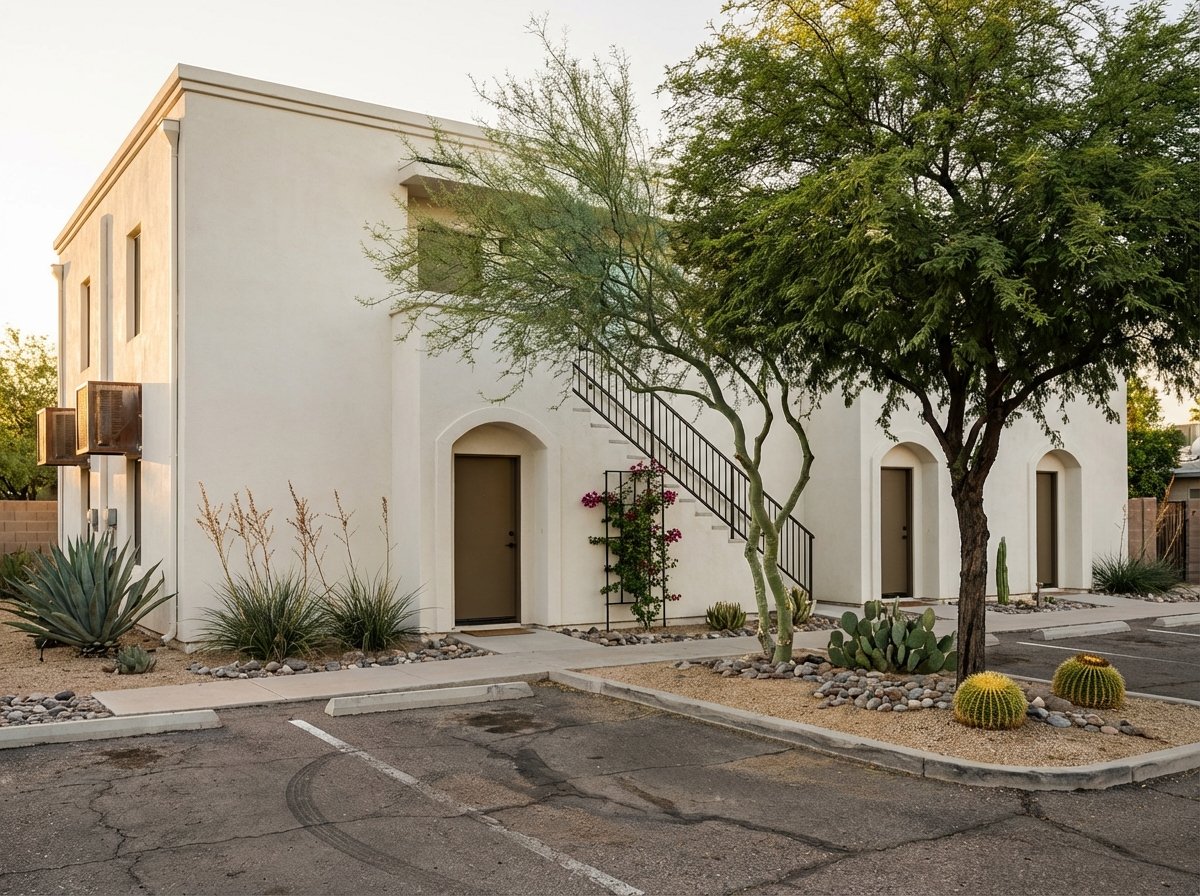
Is now the right time to sell your Phoenix duplex, triplex, or fourplex? When rents soften, vacancies creep up, or a refinance gets expensive, timing your exit matters a lot. You want clear signals, not guesswork. In this guide, you will see the Phoenix data that matters, the owner-level triggers that point to selling, and a simple model to compare selling now versus holding and improving. Let’s dive in.
Phoenix small multifamily right now
Vacancy, rents, and concessions
Recent market trackers show Phoenix apartment vacancy around the 11 to 12 percent range in 2025 with year-over-year asking-rent declines near 2 to 3 percent. Much of the pressure ties back to heavy new deliveries and aggressive lease-up concessions. You see this most clearly in higher-end product, but it spills into smaller assets through tenant choice and pricing expectations. Review effective rents, not just advertised rates, when you underwrite your property. For metro context, see the Yardi Matrix Phoenix update on supply, vacancy, rent trends, and concessions here.
Pipeline and pricing
Industry reports counted roughly 18,000 to 23,000 units under construction in 2025, with starts slowing into 2026. That pipeline path is the single biggest driver of near-term rent pressure. On the sales side, Phoenix cap rates widened from record lows and generally clustered in the mid-5 percent range in 2024–2025, with stronger, newer assets trading tighter. Get a feel for current cap rates and construction levels in the Matthews Phoenix report here.
What this means for you: small multifamily does not compete head-to-head with new 300-unit lease-ups, but your rents and occupancy still feel the metro supply wave. Your immediate submarket within 1 to 3 miles will matter most, so focus on hyper-local comps and concessions.
Signals it is time to sell
Rents slipping and new supply nearby
If your submarket shows multiple quarters of flat or negative effective rent, and you see more deliveries within the next 6 to 12 months, consider listing before your NOI takes another step down. The metro backdrop of modest rent declines and elevated vacancy supports a careful timing review. For rent and pipeline context, refer to Yardi’s Phoenix market findings here.
Refinance cliff or DSCR squeeze
Lenders commonly target DSCR in the 1.20 to 1.30 range for commercial underwriting. If your loan matures within 12 to 36 months and a refinance at current rates pushes DSCR below typical thresholds or requires a big cash injection, selling can beat recapitalizing under tough terms. Run a DSCR sensitivity with your actual rents, expenses, and today’s rates. Learn more about lender DSCR focus and underwriting sensitivity here.
Two rate notes to anchor your model:
- Consumer 30-year fixed rates averaged about 6.1 percent in early February 2026, which shapes owner-occupied and investment loan costs at the small end of the market. See recent PMMS coverage here.
- For 5+ unit loans, agency small-balance pricing often starts in the mid-5s depending on terms, LTV, and DSCR. See representative program context here.
Big capital needs ahead
If near-term capital projects like roofs, HVAC, or building envelope work exceed available reserves and approach 10 percent or more of current value, selling can preserve equity. Many owners underwrite ongoing replacement reserves in the range of 3 to 5 percent of gross income or about 200 to 400 dollars per unit per year, then layer big-ticket items separately. See reserve budgeting examples here.
You want liquidity or simplicity
Life changes, partnership shifts, and a desire to simplify are valid reasons to sell even in a mixed market. If you plan to diversify or scale into different product types, a 1031 exchange can keep capital working while deferring taxes. Timing and execution matter, so decide early if an exchange fits your goals.
Signals to hold and optimize
Strong micro location and tenant demand
If your immediate area still leases quickly at market rent with modest concessions, and you can show clean unit turns with limited downtime, holding may win. Smaller buildings in well-located pockets can be resilient even when metro averages soften. Verify with hyper-local rent rolls and walkable comps.
Owner-occupied financing options
On 1 to 4 units, living in one unit can unlock cheaper owner-occupied financing compared to pure investment loans. FHA allows 1 to 4 unit owner-occupied financing with different down payment and underwriting rules, and conventional programs have improved access for 2 to 4 units. If you qualify, this can lower your hold cost and push DSCR higher. Review FHA guidelines for 2 to 4 units here.
Long-term view on absorption
Starts slowed into 2026, which helps the outlook as the current pipeline gets absorbed. If your plan spans 3 to 5 years and your debt is stable, you may prefer to ride the recovery and capture rent growth later. Build conservative rent assumptions now and step growth higher only when your submarket data supports it.
Model your decision in 30 minutes
Use three simple scenarios. Ask your broker or analyst to run them over 3 and 5 years with your actual numbers.
Scenario 1: Sell now
- Price at today’s small-multifamily comps for your submarket and unit count.
- Deduct commission and customary Arizona seller costs. Arizona does not levy a statewide percentage transfer tax, but you should budget for title, escrow, recording, prorations, and any buyer credits. See a local overview of seller costs here.
- Estimate taxes. Depreciation recapture can be taxed up to a maximum federal rate of 25 percent, and remaining long-term gain is taxed at long-term capital gains rates; high earners may also face the 3.8 percent NIIT. See IRS Publication 544 here.
- If using a 1031 exchange, remember the 45-day identification and 180-day exchange deadlines and use a Qualified Intermediary to hold proceeds. See IRS Form 8824 instructions here.
Scenario 2: Hold and improve
- Set rent growth to a conservative 0 to 2 percent with current vacancy and concession assumptions pulled from your submarket.
- Schedule immediate capex with actual contractor quotes. Add ongoing reserves of 3 to 5 percent of gross income or 200 to 400 dollars per unit per year.
- Stress test a refinance in 12 to 24 months using today’s rate environment and your lender’s DSCR target. If DSCR falls below about 1.20 to 1.25, note the equity gap required to close.
Scenario 3: Hold long term
- Model a slower first year, then step rent growth back toward a 2 to 4 percent CAGR only after nearby deliveries lease up and concessions fade.
- Assume amortizing debt and a normal replacement-capex cycle.
- Value your exit under multiple cap-rate outcomes: current market, plus 100 basis points, and minus 50 basis points. Even small changes in cap rate can materially move price.
Pricing, cap rates, and buyer demand
Cap rates are the bridge between your NOI and value. Phoenix saw cap rates expand from record lows, with many trades clustering in the mid-5s in 2024–2025 and stronger assets trading tighter in top submarkets. Price sensitivity to even a 50 to 100 basis point shift can be significant, so model it before you list. For current Phoenix cap-rate context, see Matthews’ report here.
Remember that broader market commentary points to cap-rate drift higher in the recent cycle as financing costs rose. Build your price range with a base case and a more conservative cap case so you are not surprised during negotiations.
Costs, taxes, and 1031 basics in Arizona
- Arizona does not charge a statewide percentage transfer tax. Sellers usually cover commission, an owner’s title policy, escrow and recording fees, prorated taxes, HOA transfer items if applicable, and any negotiated credits. See a practical Arizona cost overview here.
- Depreciation recapture can be taxed up to a maximum federal rate of 25 percent, with the rest of your long-term gain taxed at standard capital gains rates. High earners may face the 3.8 percent NIIT. Review IRS Publication 544 here.
- A 1031 exchange can defer both capital gains and depreciation recapture if you follow the rules exactly. You have 45 days to identify and 180 days to acquire replacement property, and you must use a Qualified Intermediary to hold funds. See the IRS instructions for Form 8824 here.
What to prepare before you list
Give this package to your broker so they can price accurately and cut days from escrow:
- Rent roll with lease dates, deposits, and any concessions.
- Last three years of P&L or Schedule E and year-to-date financials.
- Current loan details: payoff, maturity, rate, and any prepayment penalty.
- Capital expense history and open bids for near-term work.
- Unit photos and a condition report.
- Your decision on a taxable sale or a 1031 exchange, and your preferred timeline.
How GRACE CRE helps Phoenix owners
You deserve boutique guidance with institutional execution. GRACE CRE represents Phoenix sellers and buyers of small to mid-cap multifamily with clear, data-backed strategy. Here is how we help you choose and execute the right move:
- Submarket-specific pricing and comp analysis for duplexes, triplexes, fourplexes, and small apartment buildings.
- Underwriting and refinance stress testing that highlights DSCR, capex, and cap-rate sensitivity.
- Targeted marketing across MLS and investor channels, plus access to off-market buyers to compress time-to-close.
- 1031 exchange facilitation, including timelines, Qualified Intermediary coordination, and replacement property sourcing across Phoenix and South Florida.
- Renovation and lease-up coordination to support a hold-and-improve strategy if selling is not the best outcome.
If you want a net-proceeds estimate, a three-scenario decision model, or a quiet valuation check, start a confidential conversation with GRACE CRE. We will help you time your sale or sharpen your hold plan with clarity and care.
FAQs
What Phoenix market stats matter most before selling a duplex?
- Focus on your submarket’s vacancy trend, effective rent after concessions, and the near-term construction pipeline, then price off nearby small-multifamily comps.
How does a 1031 exchange work for a fourplex sale in Arizona?
- You must use a Qualified Intermediary, identify replacement property within 45 days, and close within 180 days to defer both capital gains and depreciation recapture under IRS rules.
What DSCR do lenders want when I refinance a small multifamily?
- Many lenders target about 1.20 to 1.30 DSCR, so run a sensitivity at today’s rates to see if you qualify without injecting new equity.
Are there transfer taxes when I sell in Phoenix?
- Arizona does not impose a statewide percentage transfer tax, but you should budget for title, escrow, recording, prorations, and any negotiated credits.
Should I wait for rent growth to recover before selling my triplex?
- If your micro market is soft and more supply is coming, an earlier sale may protect value; if your submarket is firm and debt is stable, holding and optimizing can be better.