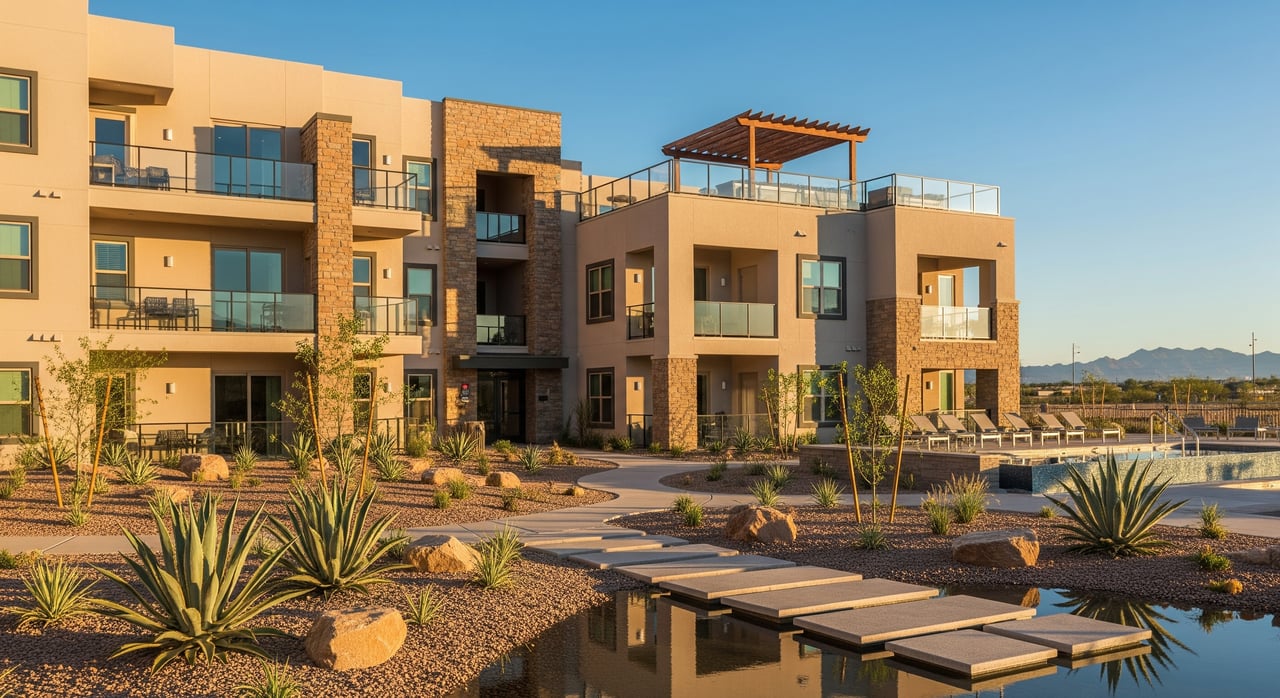
Thinking about a duplex, fourplex, or a small apartment in Greater Phoenix? In Maricopa County, what you can build comes down to zoning, overlays, and a few practical site checks that can make or break your numbers. If you know where to look, you can quickly confirm what is possible, what needs approvals, and how long it might take. This guide walks you through the basics, the early feasibility checklist, parking rules, and the best public resources to use. Let’s dive in.
How zoning works in Maricopa County
Maricopa County is split between unincorporated areas and incorporated cities and towns. If a parcel is inside a city, that city’s code and processes apply. If it sits in unincorporated county, you follow Maricopa County Planning and Development.
Most rules that affect small multifamily, like whether a duplex or garden apartment is allowed, are set by the city or town where the parcel sits. For help and maps, start with the county and city planning portals, like the Maricopa County Planning and Development pages and the City of Phoenix Planning and Development Department.
What to check first
A rapid site screen helps you avoid surprises. Focus on these items early:
- Zoning district and permitted uses. Confirm if multifamily is allowed by right or needs a conditional use or rezoning.
- Allowed density. Look for units per acre or minimum lot area per unit. Density caps often drive feasibility.
- Height, setbacks, and lot coverage. These standards shape your building footprint and unit count.
- Parking requirements. Ratios by unit type plus guest parking can consume land or force structured parking.
- Overlays, specific plans, PADs or PUDs. These can modify or supersede base zoning.
- Entitlement pathway. Note any variances, conditional use permits, design review, or full rezoning steps.
- Utilities. Check water and sewer availability and capacity, along with tap fees.
- Site constraints. Floodplain, arroyo, drainage, soils, or protected features can reduce buildable area.
- Access and off-site work. Frontage, traffic impacts, and required street improvements affect cost.
- Fees and timing. Add plan check, impact fees, and realistic approval timelines to your pro forma.
Use official maps and contacts
Here is a simple process to confirm your parcel’s path:
- Pull the parcel in the county or city GIS viewer to confirm the Assessor’s Parcel Number, zoning district, overlays, and the General Plan designation. The Maricopa County site is a good starting point.
- Open the city’s planning pages to read the zoning district chapter and parking tables. For example, use Phoenix Planning and Development, Mesa Planning and Zoning, Scottsdale Planning and Development, or Tempe Development Services.
- Schedule a pre-application meeting if you see potential hurdles. Most cities offer this to flag rezoning needs, design review, traffic studies, and timelines.
- Contact the water and sewer provider for capacity and tap fee guidance.
- Check floodplain status using the FEMA Flood Map Service Center. If near transit corridors, review Valley Metro’s regional plans for any TOD policies.
Know your overlays
Overlays can change the rules for use, height, parking, and design. Common ones across Maricopa County include:
- Transit-oriented development corridors that may allow higher densities and reduced parking near rail or frequent bus.
- Infill or redevelopment overlays that offer flexible setbacks or parking reductions.
- Historic preservation overlays that require exterior design review.
- Airport or airspace overlays that limit height and may restrict residential near runways.
- Floodplain or arroyo overlays that trigger drainage mitigation and cut buildable area.
- Specific or area plans, and PAD/PUD zoning, which set custom standards for a site or district.
Always check the zoning map’s overlay layers and any specific plan documents.
Parking that drives feasibility
Parking is often the quiet bottleneck on small infill sites.
- Typical minimums you will see for multifamily: studios around 1.0 space per unit, one-bedrooms around 1.0 to 1.25, two-bedrooms around 1.25 to 1.75, and three-plus bedrooms around 1.5 to 2.0 or more. Guest parking is often added on top.
- Local modifiers include reduced ratios near high-frequency transit or in TOD overlays, lower ratios for affordable or senior housing, shared parking, or in-lieu options.
- Design details like stall dimensions, drive aisle widths, ADA stalls, and landscape islands affect the actual count.
The investor takeaway: model parking early. If a site is tight, ask planning staff about reduction tools, shared parking agreements, or on-street credits.
Approvals, timelines, and costs
Your pathway depends on whether the use is by right or needs discretionary approvals. Pre-application meetings help you spot the difference and plan your schedule.
- Typical timing ranges: pre-application and early staff check can take 2 to 6 weeks. If the use is allowed and your submittal is clean, administrative approvals and building permits can run 1 to 3 months. If you need a conditional use, PAD/PUD, or rezoning with public hearings, plan for about 3 to 9 months, sometimes longer. From entitlement through building permit to groundbreaking, many projects span 6 to 18 months.
- Budget early for application and plan check fees, impact and development fees, professional services, off-site improvements, and any mitigation like flood control. Utility tap fees and capacity upgrades can be meaningful line items.
Build contingency into both time and dollars. Neighborhood input or off-site work can change the path.
First 30 days on a parcel
Use this quick-start plan to get clarity without over-spending:
- Verify the parcel’s APN, zoning district, overlays, and General Plan designation in the city or county GIS.
- Read permitted uses, density, height, setbacks, and parking standards for the zone in the municipal code.
- Sketch a rough site plan that accounts for setbacks, open space, and parking to estimate realistic unit count.
- Call planning staff to confirm interpretations and ask about likely discretionary approvals.
- Request water and sewer capacity confirmations and current tap fee schedules from the provider.
- Check FEMA flood maps and any local flood or arroyo overlays.
- If the path is not by right, schedule a pre-application meeting and ask about timelines, hearing steps, and required studies.
Pitfalls to avoid
A few red flags can derail your timeline or math if you miss them:
- The parcel is zoned single-family only and bars duplexes or higher density without rezoning.
- An overlay or specific plan caps density below your target or restricts residential use.
- Sewer or water capacity is constrained or off-site extensions are costly.
- The site lies in a floodplain, arroyo setback, or airport overlay that limits building area or height.
- Required access, frontage improvements, or traffic mitigation make the project uneconomical.
- Public hearings draw strong opposition, adding months and conditions.
How GRACE CRE helps
If you want a clean, investor-focused read on a parcel’s potential, bring in a team that lives in the details. GRACE CRE supports small- to mid-cap multifamily investors with sourcing, underwriting, due diligence, and execution in Greater Phoenix and Scottsdale. We also offer a rapid site feasibility screen to flag zoning, parking, overlays, utilities, timing, and costs before you commit.
Ready to evaluate a Maricopa County parcel for duplex, fourplex, or small apartment potential? Start a quick feasibility screen and align your plan with the local code and process. Invest with GRACE CRE.
FAQs
What is the difference between county and city zoning in Maricopa County?
- Incorporated cities and towns set and administer their own zoning codes and approvals, while unincorporated parcels follow Maricopa County Planning and Development rules.
How do I confirm if a lot allows a duplex, triplex, or fourplex?
- Check the parcel’s zoning district on the official zoning map, read permitted uses and density for that district, then call planning staff to confirm any discretionary approvals.
Where can I find parking requirements for apartments near Phoenix transit?
- Review the city’s zoning code parking tables and any TOD overlay policies, and consult regional plans through Valley Metro’s resources.
What timelines should I expect if rezoning is required?
- Discretionary approvals that include public hearings often take about 3 to 9 months, and full entitlement to building permit can span 6 to 18 months depending on scope.
How do I check floodplain issues for a Maricopa County parcel?
- Use the FEMA Flood Map Service Center and verify with local flood control resources to understand drainage and mitigation requirements.
Which departments should I contact first when evaluating a site?
- Start with Planning or Development Services for zoning and entitlements, Building for permits, Public Works for access and improvements, and the water and sewer providers for capacity and fees.
What public portals should I use to research city-specific rules?
- Begin with the city planning pages, such as Phoenix Planning and Development, Mesa Planning and Zoning, Scottsdale Planning and Development, Tempe Development Services, and the Maricopa County site for unincorporated areas.